
Most Repair Conversations Start the Same Way
Someone messages the studio "” usually via Instagram or the contact form "” with a photo taken in natural light and a question that is some version of: "do you think this can be fixed?" The answer is almost always yes. The more useful question is what the fix actually involves, and that requires seeing the piece.
Sara offers free initial assessments. For clients who are not local to Kiama, that assessment can begin online from clear photos, though some repairs genuinely require the piece in hand before a quote can be confirmed. The assessment is not a sales conversation "” it is a technical evaluation of what the piece needs.
Have a piece that needs attention? Sara offers free assessments "” in studio in Kiama or via email and video call for clients further afield.
Book a Free Assessment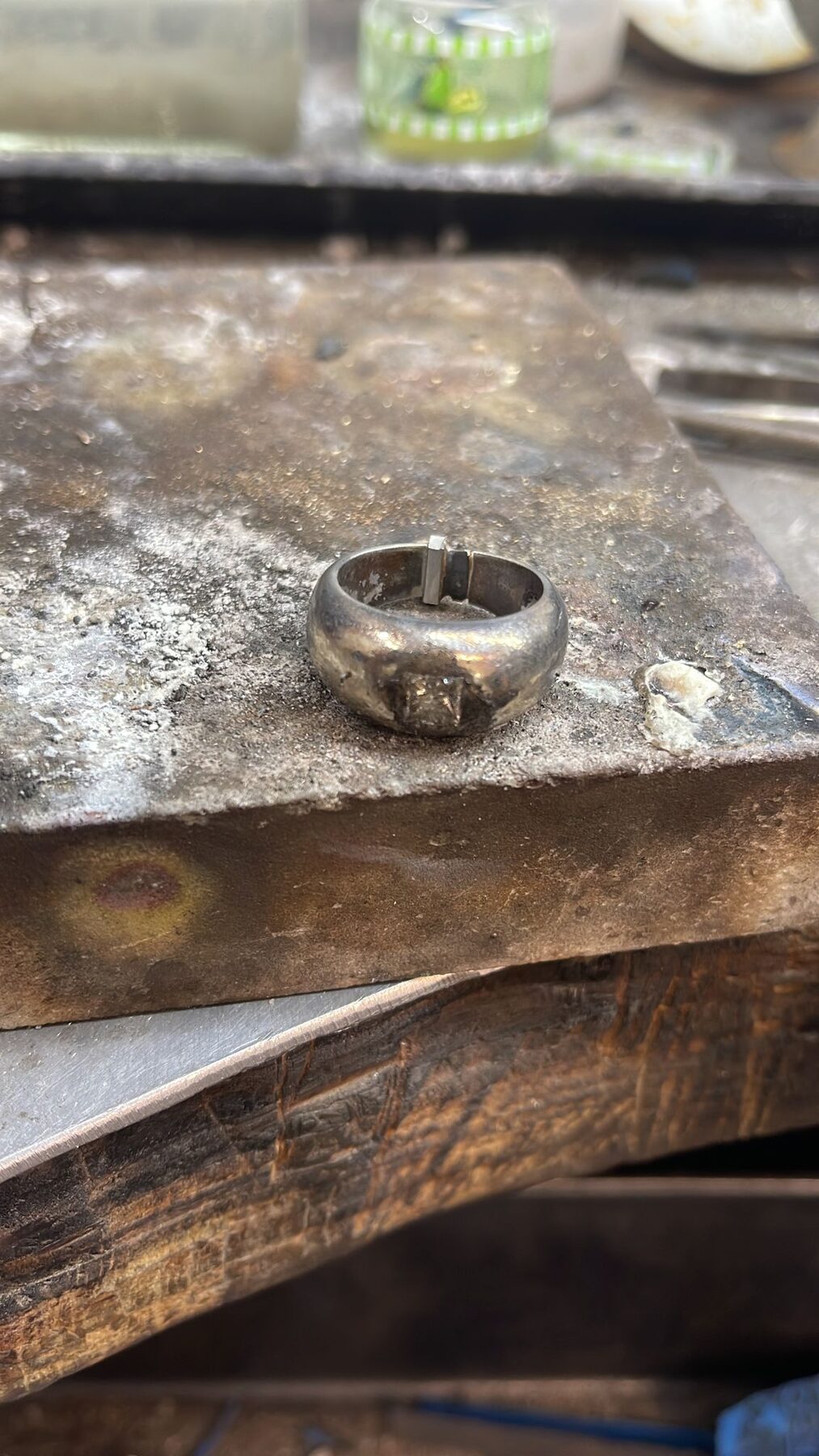
What arrives on the bench "” a ring that has been waiting to be resized. Most pieces come in having been quietly set aside for longer than the owner expected.
More Than a Quick Look
When a piece arrives at the studio, Sara examines it under a jeweller's loupe. Not just the visible damage "” the whole piece. A claw that has broken is obvious. The claws that are about to break are the ones that matter. Assessment means identifying the full picture before any work is agreed.
Sara checks stone security in every setting, assesses solder joins for porosity or previous repairs, examines the metal gauge for wear, and looks at any engraving or surface detailing that might be affected by the work. Sara will verbally provide a quote on the work before anything is started "” no written assessment, just a clear conversation about what is needed and what it will cost.
What the Most Common Repairs Involve
Resizing Up or Down
Ring sizing involves cutting the band, adding or removing gold, and re-soldering and refinishing the join. Sizing up adds a small piece of matching-gauge gold; sizing down removes the equivalent. Sara matches the alloy and colour of the original metal so the join is invisible once polished. Most rings can be sized up to two full sizes before the proportions of the band change meaningfully. Rings with diamonds or gemstones set in the band can limit how many sizes are possible, as the setting positions constrain where the band can be cut. White gold rings also require rhodium plating after sizing to restore the finish.
Rebuilding Worn Claws
Worn claws are one of the most common repairs Sara sees "” and the most important one to address early. A claw that has worn to half its original height can fail during normal wear. Re-tipping builds up each claw with matching gold, re-shapes them to hold the stone securely, and re-polishes the setting. It is significantly less expensive than replacing a lost stone.
Broken Links and Clasps
Most chain repairs involve a broken jump ring or a failed clasp. Sara repairs or replaces the failed section and checks the full length of the chain for other weak points. Clasp mechanisms that have worn loose or failed are replaced with new hardware matched to the chain gauge and style.
Maintenance for White Gold
White gold jewellery is plated with rhodium to give it its bright, white finish. That plating wears over time "” typically every 12 to 18 months for pieces worn regularly. When it wears through, the warmer yellow of the underlying gold starts to show. Replating restores the original finish and is a routine part of maintaining white gold jewellery. Sara offers rhodium plating as a standalone service.
Scratches, Dents, and Re-polishing
Surface work ranges from a quick re-polish to remove light scratching through to removing dents and re-texturing areas that have been damaged. Sara's approach is always to restore the original surface finish rather than impose a new one "” a brushed gold ring stays brushed, a high-polish piece stays high-polish.
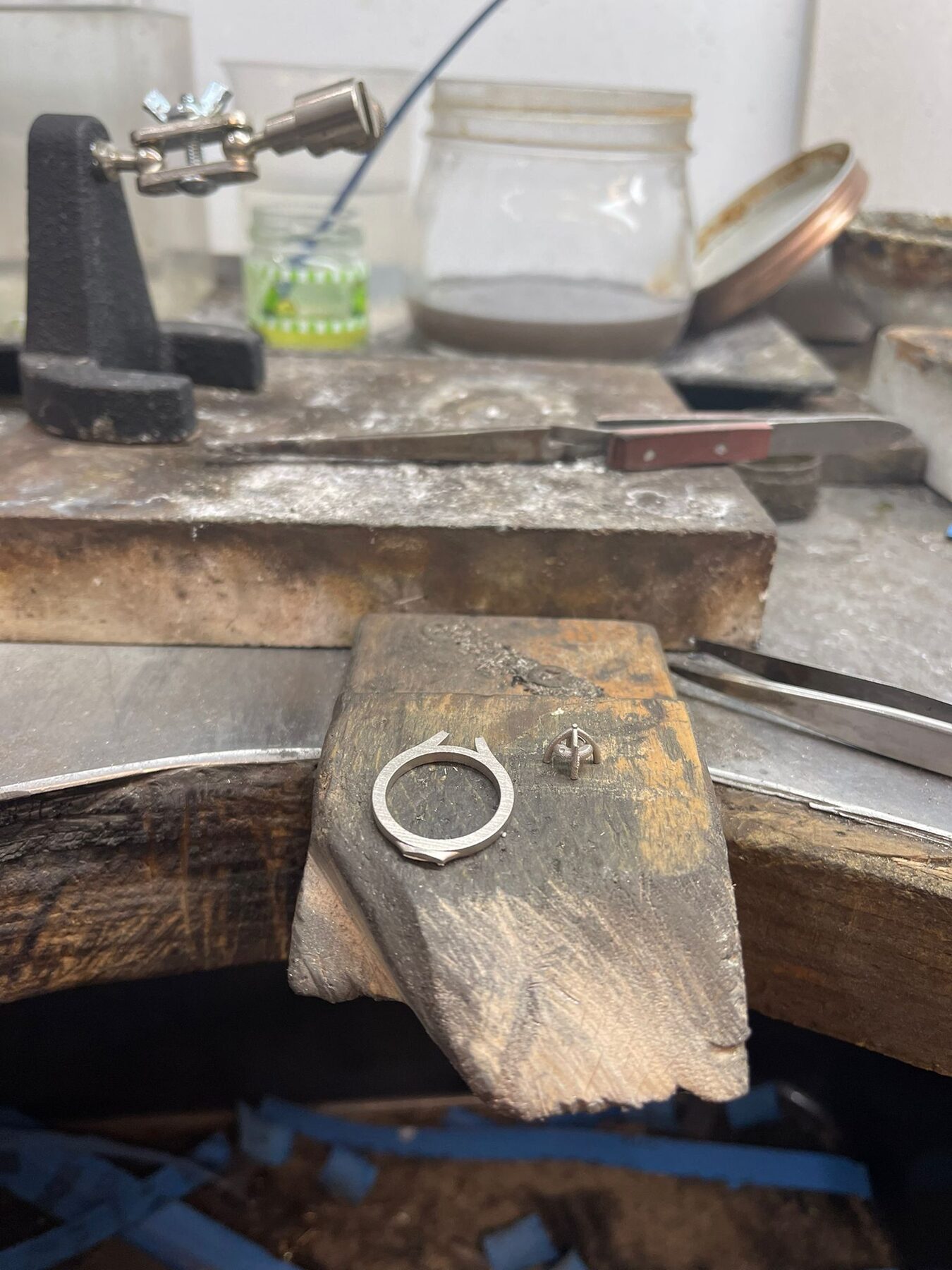
A ring shank being formed at the bench. Repair work is bench work "” hands, tools, heat, and time.
The Honest Answer
Most repairs at Sara Handmade Jewellery are completed within one to two weeks. Straightforward resizing or claw re-tipping sits at the lower end of that range. Repairs involving stone replacement, significant metal work, or pieces that need to be sent away for specialist work can take longer.
Sara provides a realistic timeline at the assessment. Our jewellers work on one project at a time "” your piece is not in a production line, and Sara does not rush repairs that need time. If a repair is urgent, mention it at the assessment and Sara will advise on what is possible.


